


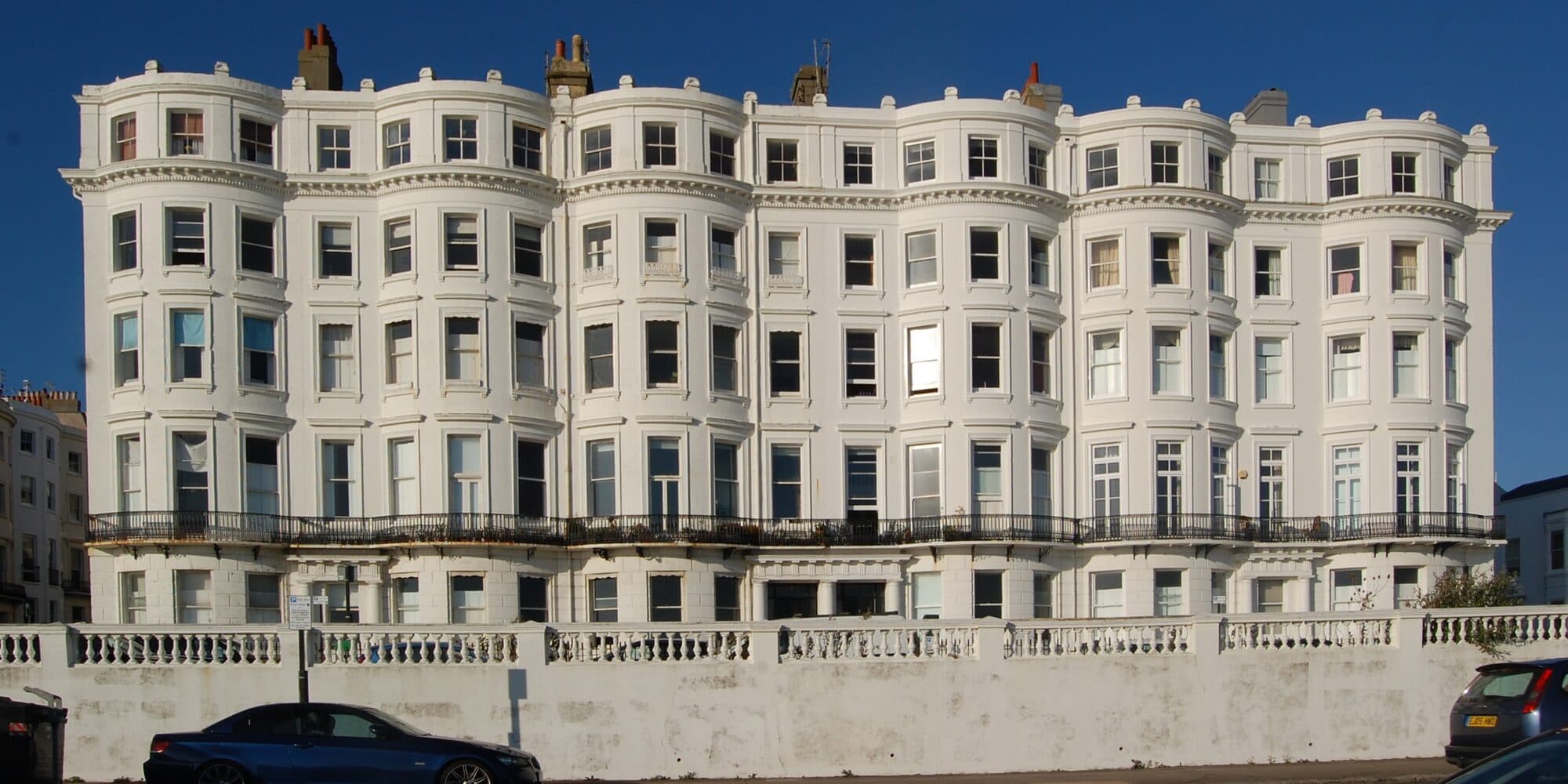
Two similar properties on the same Sussex street can receive very different bills. One may remain in council tax and attract a second-home premium. Another may be assessed for business rates and qualify for relief.
The difference is not decided by calling the property a holiday let. It depends on commercial availability, actual bookings, future intention and the Valuation Office Agency’s assessment.
The short answer
In England, a self-catering property is valued for business rates when all of these conditions apply:
- it is let commercially for short periods of 28 nights or fewer;
- it was available for commercial short lets for at least 140 nights in the previous 12 months;
- it was actually let commercially for at least 70 nights in that period; and
- the owner intends to make it available commercially for at least 140 nights in the following 12 months.
These are the current government criteria. If the property meets them, the owner must apply to the Valuation Office Agency, usually shortened to VOA. The VOA decides whether to enter it in the rating list and sets its rateable value.
If the conditions are not met, the property normally remains in council tax. That may expose an under-used, substantially furnished property to the council’s second-home premium.
Available nights and let nights are not the same
The 140-night test is about genuine commercial availability. The 70-night test is about nights actually let.
An online calendar that appears open is not necessarily enough. The property must be offered commercially with a view to making a profit. Nights blocked for the owner, family or maintenance are not available to the public. Free stays do not become commercial bookings because they were recorded in a calendar.
Keep evidence such as:
- platform and direct-booking calendars;
- reservation records and invoices;
- bank statements and payout reports;
- advertising and listing history;
- dates withheld for owner use or maintenance; and
- the forward calendar showing the intention to offer at least 140 nights.
The tests use rolling 12-month periods, not a vague sense that the property was “open most of the year”. Reliable booking records make the application and annual confirmation much easier.
What happens with a new holiday let?
A new property cannot demonstrate 70 nights of commercial letting on its first day. It will ordinarily begin in the council-tax list. Once the required historic availability and letting conditions are satisfied, the owner can apply for business rates.
Do not remove council tax from a startup forecast merely because the plan is to exceed the thresholds. Until the VOA changes the listing, the current bill remains the current bill.
After a property enters business rates, the owner is asked to confirm regularly that it still meets the conditions. If bookings fall below the qualifying level, it can be moved back to council tax.
That creates a commercial point people miss: low occupancy can affect more than revenue. It may also change the rating treatment for the next period.
How the business-rates bill is worked out
The VOA gives the property a rateable value based on matters including its type, size, location, quality and the income it is reasonably expected to produce from letting. The council then uses that rateable value and the relevant multiplier to calculate the bill, before reliefs.
Rateable value is not the same as market value, annual revenue or profit. It is a rating assessment. You can search the business-rates valuation list to see the entry and use the VOA process if the facts are wrong.
Do not copy the rateable value from a neighbouring property into a forecast. Differences in layout, quality, capacity and assessment date can matter.
Small Business Rate Relief may reduce the bill
An owner who uses only one business property may qualify for Small Business Rate Relief in England:
- a rateable value of £12,000 or below can receive 100 per cent relief; and
- relief tapers from 100 per cent to zero where the rateable value is £12,001 to £15,000.
At a rateable value of £13,500, for example, current government guidance gives 50 per cent relief. At £15,000, the relief reaches zero.
The one-property condition has limited exceptions for additional small properties, and circumstances can change the entitlement. Relief is also not the same as exemption from the rating system. A property can have a rateable value and a nil bill because relief has reduced the amount due.
Check the current Small Business Rate Relief guidance and apply through the council. Do not assume the relief will be added automatically.
The second-home council-tax premium
Since 1 April 2025, councils in England have had the power to charge a premium of up to 100 per cent on second homes. In practical terms, a council using the full power can charge twice the normal council-tax amount.
For council-tax purposes, a second home is broadly a dwelling that is substantially furnished but is not anyone’s sole or main residence. The power is discretionary. Each council decides whether to use it, where it applies and at what rate up to the statutory maximum.
National regulations also provide exceptions in defined circumstances. These can include some properties actively marketed for sale or let, job-related dwellings and certain annexes or seasonal homes, subject to the exact conditions and time limits. An exception generally removes the premium, not the underlying council-tax bill.
This is why an owner should not use a national article to calculate a Sussex bill. Check the authority’s current decision and the property’s facts.
Does switching to business rates always save money?
No.
A property qualifying for 100 per cent Small Business Rate Relief may have no business-rates bill, which can look attractive beside council tax plus a premium. But the conclusion can change if:
- the rateable value is above the relief thresholds;
- the owner operates several properties;
- the property fails the 70-night letting test;
- additional waste or commercial services cost more;
- the owner makes availability decisions primarily to chase a tax outcome; or
- the commercial model needed to secure 70 nights produces weak rates and poor net income.
Filling low-demand nights at any price to preserve rating eligibility can damage the wider business. The right booking strategy protects rate, guest fit and review quality as well as occupancy.
Tax treatment is one input. It is not the commercial answer.
Work out the bill alongside the revenue
A Performance Review looks at rate, occupancy and the rating position together, so the tax decision does not end up driving the booking strategy.
Where to check a Sussex property
First identify the billing and planning authority for the address. South House properties may sit within:
- Brighton & Hove City Council;
- Adur & Worthing Councils;
- Arun District Council; or
- Chichester District Council.
Do not infer one council’s policy from another’s. For the current position:
- Check the existing listing. Search the council-tax band and the VOA business-rates list.
- Count the evidence. Record commercially available nights and actual short-let nights for the relevant 12 months.
- Check the council. Read its current second-home premium, exceptions and relief application guidance.
- Contact the VOA. Apply if the English self-catering criteria are met, or correct inaccurate property information.
- Retain the records. Keep booking, availability and intention evidence for the annual confirmation.
Use the government’s current self-catering business-rates guidance as the national starting point, then apply the local authority’s current policy.
Three common mistakes
“I listed it for 140 nights, so it qualifies”
Availability alone is insufficient. The property also needs at least 70 nights of actual commercial short letting in the previous 12 months, plus the forward intention test.
“Business rates mean I will pay nothing”
Only where the valuation and relief conditions produce that result. The VOA sets a rateable value and the council applies the bill and any relief.
“It used to be an FHL, so it belongs in business rates”
The abolished Furnished Holiday Lettings income-tax regime was separate. Its old tests do not determine the current council-tax or rating list.
Put the bill inside the full property decision
For an owner with an under-used second home, a new premium can make leaving it empty more expensive. That is a valid reason to review the property. It is not proof that holiday letting will work.
Before changing the operating model, test likely revenue, seasonality, management and running costs, as well as planning and safety. The South House homeowner service is designed for owners who want the home to earn without losing control of its condition or their own use.
The Performance Review benchmarks the property against its local market and gives you a clear view of the opportunity, costs and practical constraints.